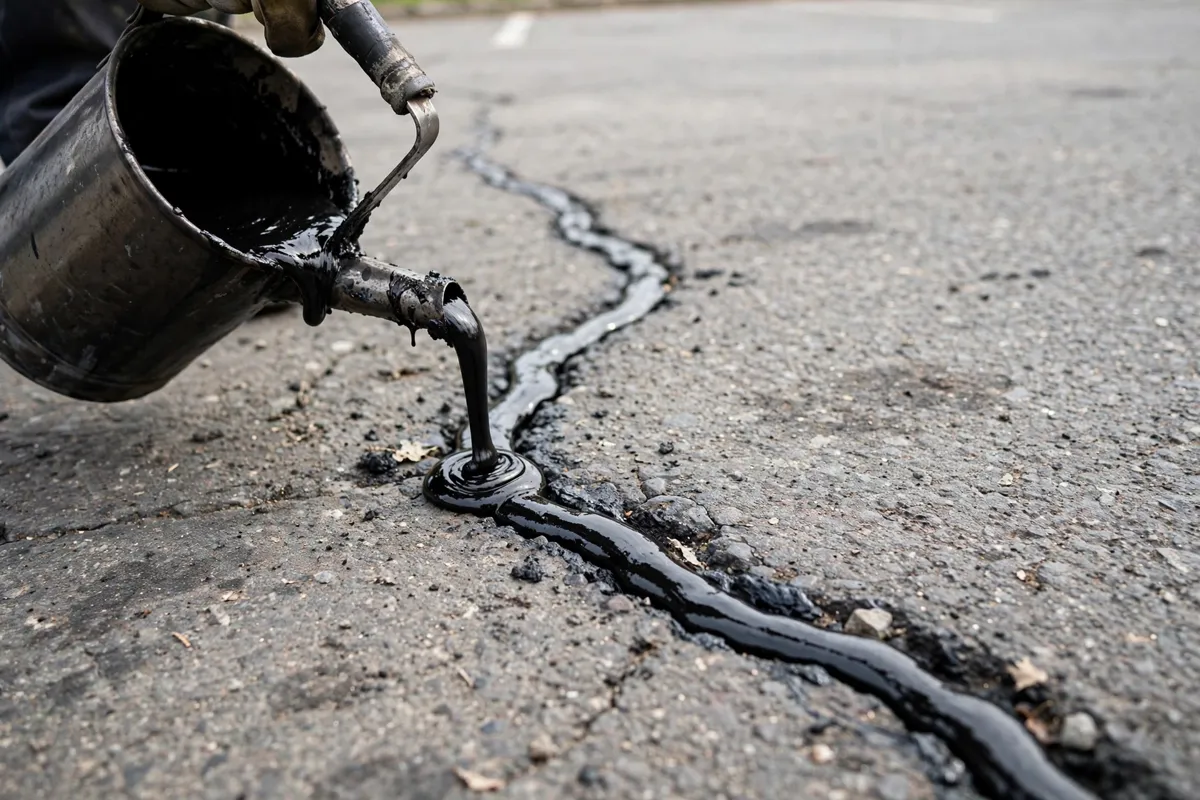
Crack filling
Hot rubberized sealant that bonds to the crack walls and flexes with temperature, keeping water out. We recommend inspecting and filling annually, ideally in spring.
Atlas looks after asphalt parking lots across Greensboro and the Piedmont Triad: crack filling, sealcoating, line striping and pressure washing. When a lot has failed past what maintenance can fix, we tell you it needs paving instead of selling you another coat.
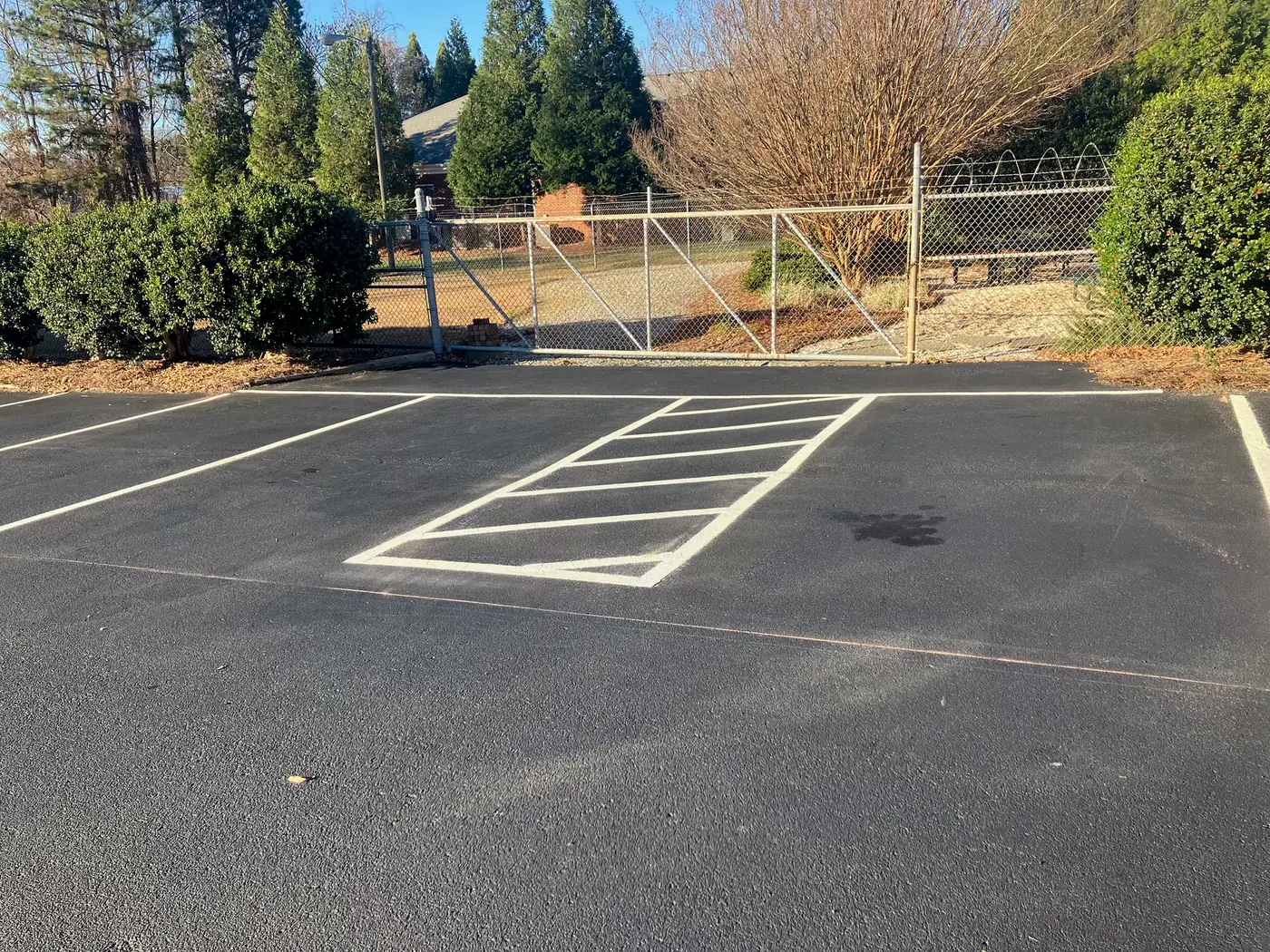
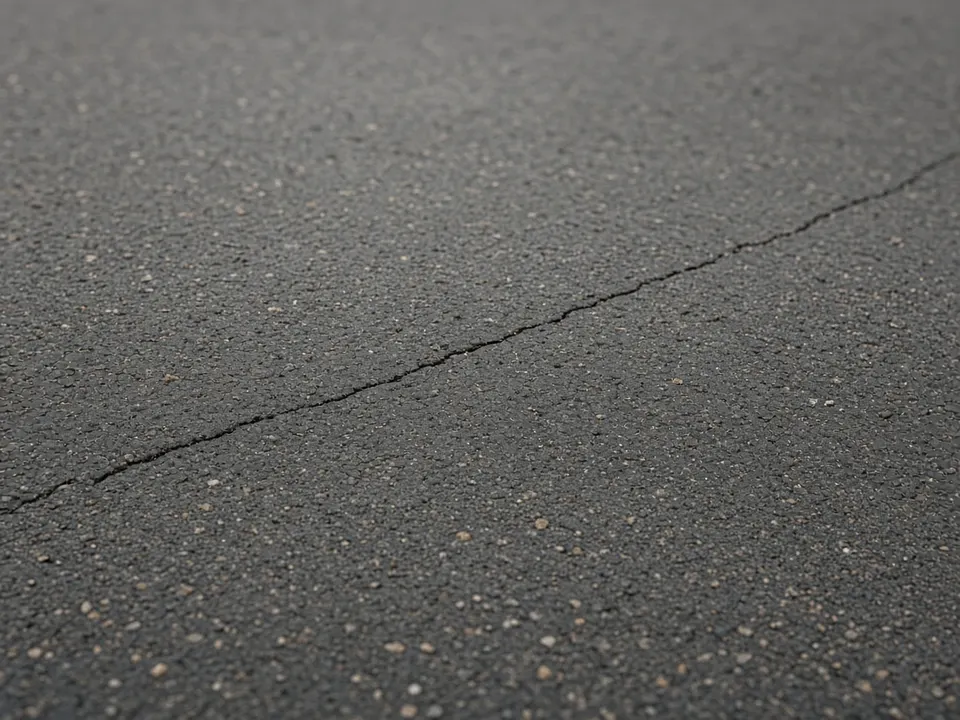
HOW ASPHALT FAILS
Asphalt rarely fails all at once. Step through what happens underneath, and where a small repair stops the whole chain.
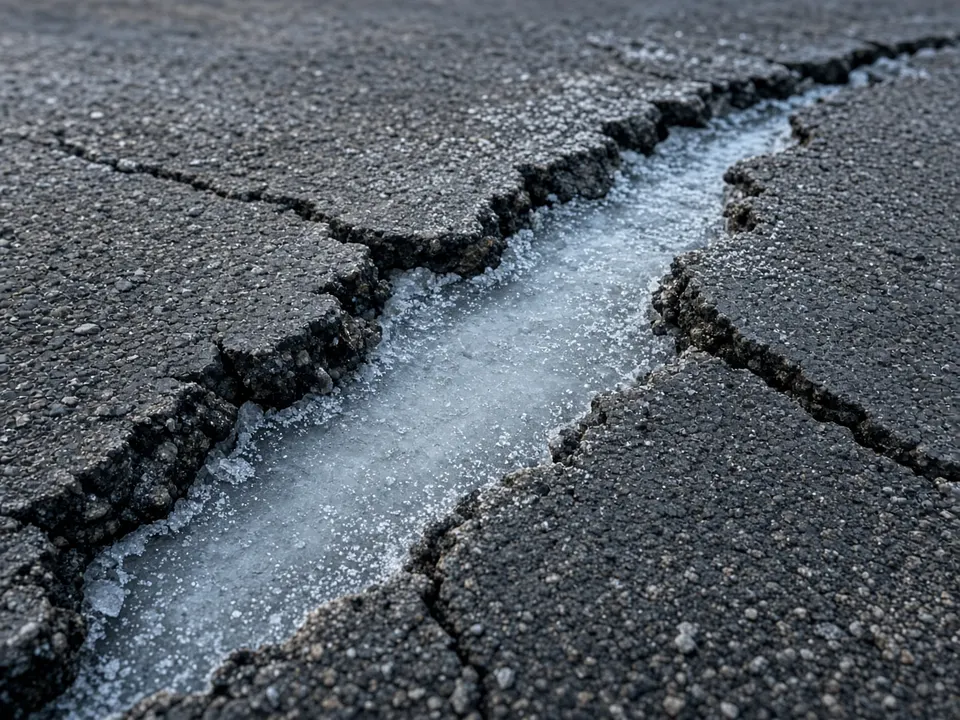
Sun and oil dry out the binder that holds the surface together, and traffic flexes it until it splits. At this stage the crack is narrow and the base underneath is still dry and strong.
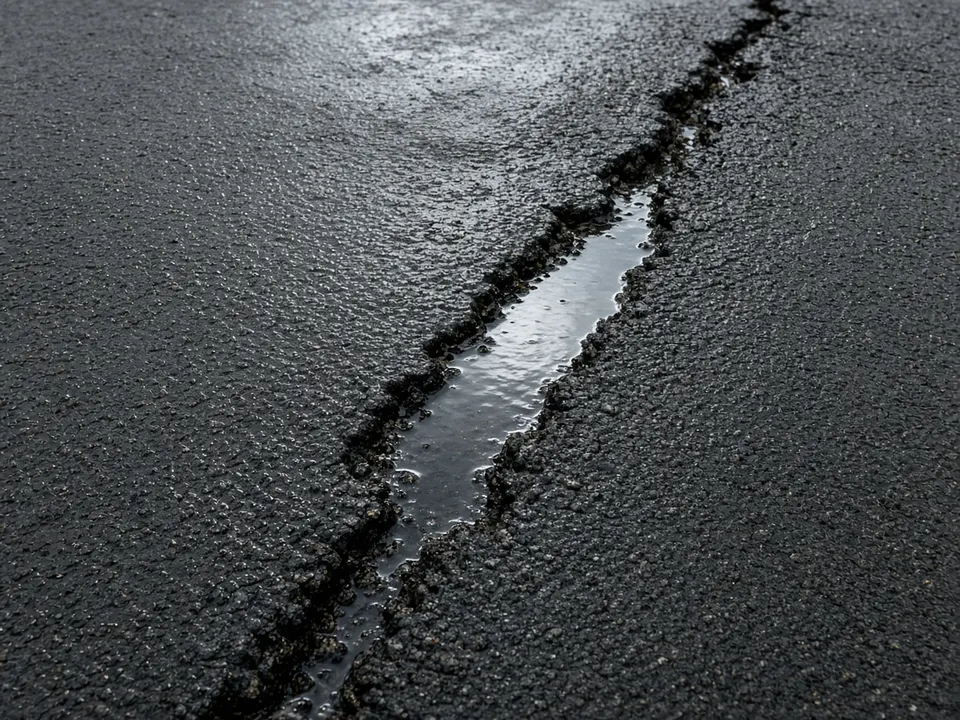
Rain runs into the crack and soaks the aggregate base. A wet base loses strength, so the surface above it starts to flex and crack further.
Triad winters cycle around freezing. Water in the crack freezes, expands and wedges the edges apart. One freeze-thaw cycle can turn a hairline crack into a network of damage, and wheels start chipping the edges.
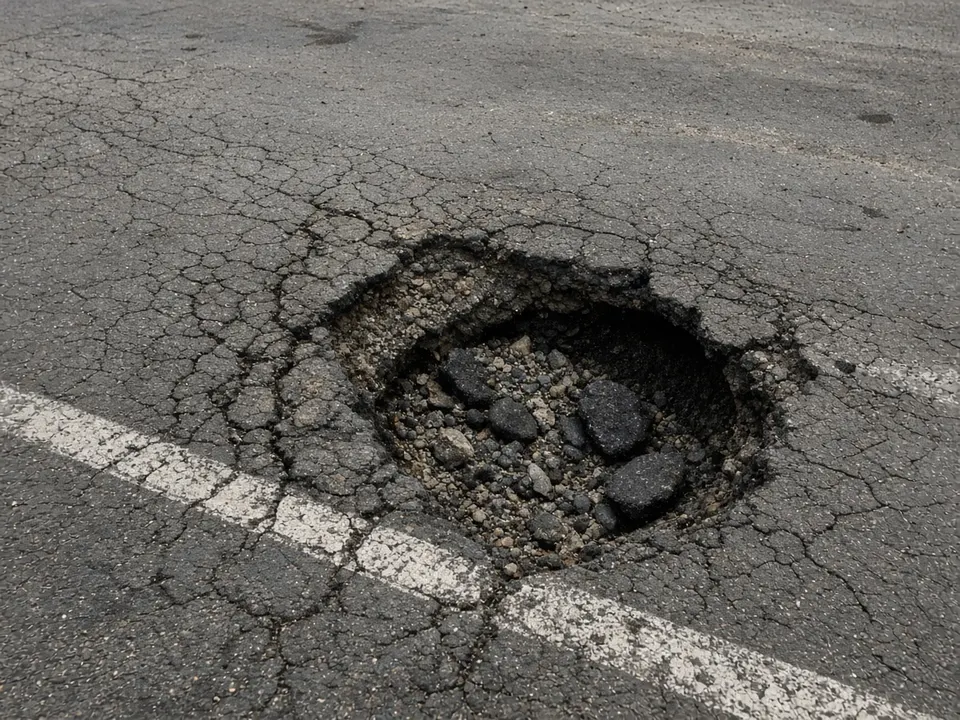
Traffic pounds the weakened spot until pieces break loose and the base underneath washes away. Left alone, a small pothole can double in size every season. A few of these are a patching job. Many of them across a lot usually mean the structure is failing.
SELF-CHECK
Five quick questions about your lot. You get an honest read on where it lands, and you can send the answers with your assessment request.
WHY MAINTENANCE PAYS
Crack filling is the highest-value preventive work on most lots. It seals the openings before water reaches the pavement structure, which is what stops freeze-thaw damage and potholes.
Sealcoating then protects the surface from UV, water and oil. Done on schedule, the two together stretch pavement life from roughly 10–12 years to 15–20. That gap is the difference between repaving in year twelve and repaving in year eighteen.
Sealcoating does not fix structure. If the lot has already failed, no coat will hold, and we will say so.
Ranges reflect Atlas field experience on Triad lots, not a guarantee for your lot.
ORDER OF OPERATIONS
Skip a step and the next one does not bond. This is the sequence we follow on every asphalt job.
Pressure or soft wash, then let it dry fully
Seal openings before water gets under
Late spring through early fall
Re-measured layout, paint, stencils, signs
Sealcoat cure, then walkthrough. Striped areas reopen the same day
WHAT WE DO ON ASPHALT
Repair first, protect second, mark it last.
Hot rubberized sealant that bonds to the crack walls and flexes with temperature, keeping water out. We recommend inspecting and filling annually, ideally in spring.
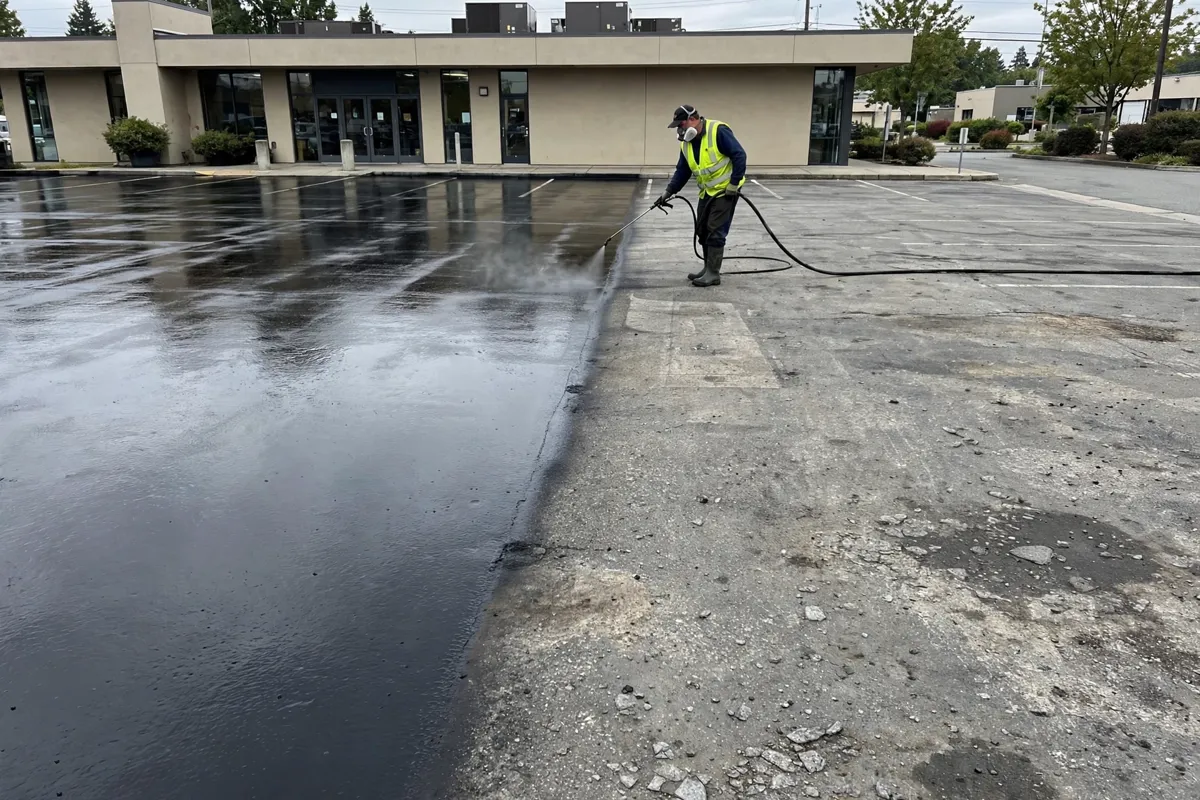
A protective coat against UV, water and oil, applied after cleaning and crack repair. Typically every 2–3 years.
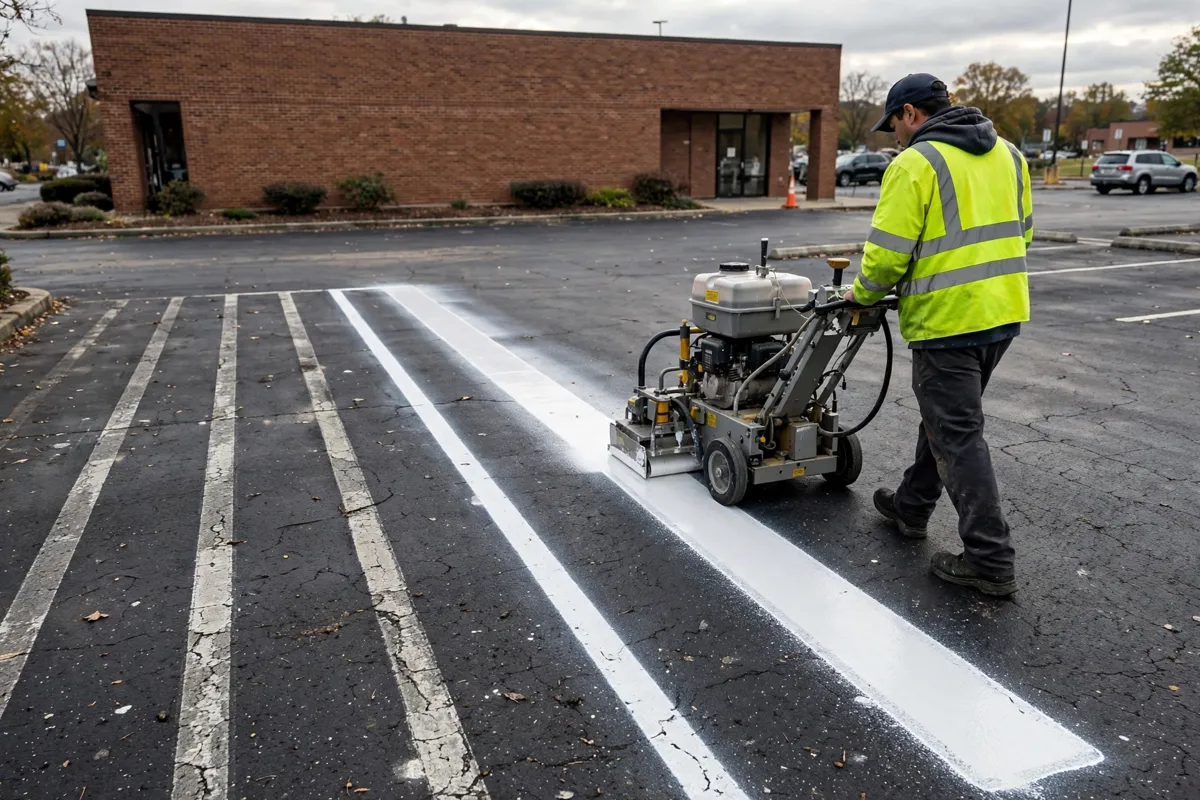
New layouts and restripes, re-measured instead of traced over ghost lines, with ADA stalls and fire lanes checked.
LINE STRIPING
It is our core service, and it is the last step after repairs or new asphalt.
Re-measured layout. We measure fresh rather than tracing ghost lines, so stall spacing stays consistent.
Paint matched to traffic. Our standard is premium waterborne traffic paint that meets NCDOT specifications. For drive aisles, crosswalks and other high-traffic areas we offer thermoplastic markings, which last 3–5 times longer than standard paint.
ADA and fire lanes checked. Accessible counts, aisle widths and yellow fire lane text are verified so striping and signage agree.
More on paint, timing and layouts: parking lot line striping in Greensboro.
WHEN IT NEEDS PAVING
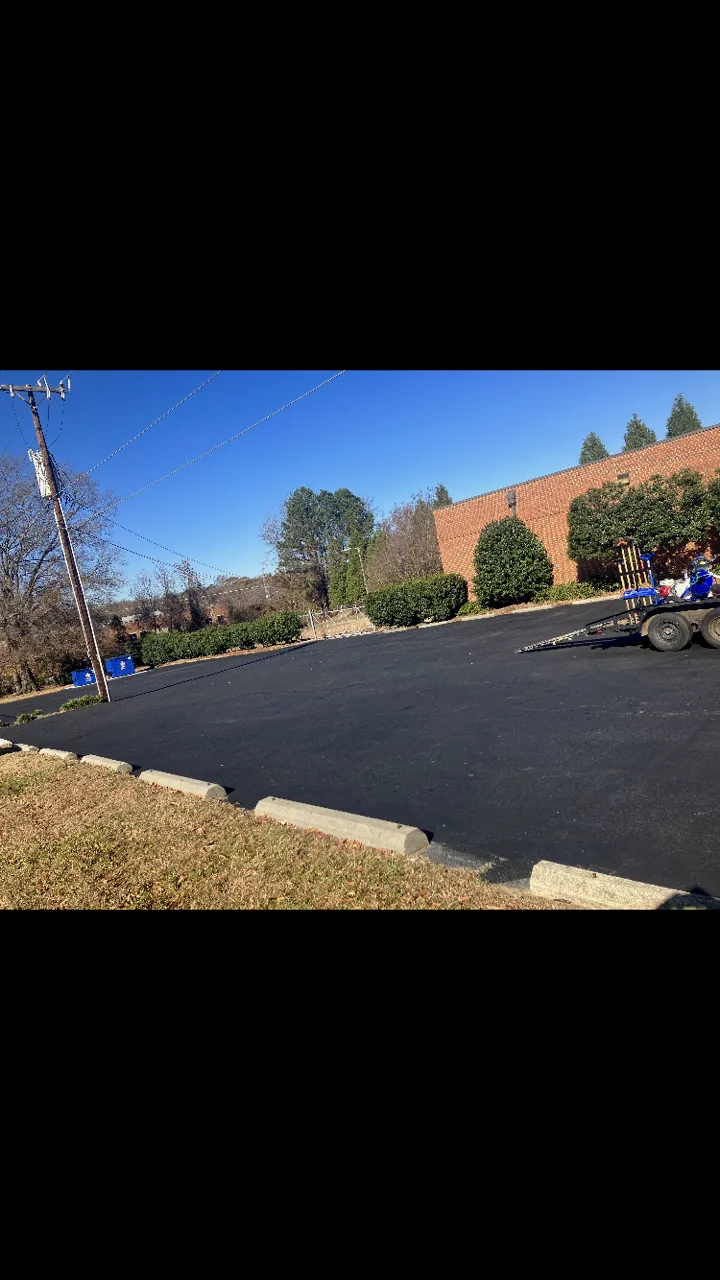
Our honesty rule: a lot that has failed structurally needs paving, not sealing. Here is what happens next.
You get our assessment in writing, with photos and the reasons, so you can compare it against any paving quote you collect.
New asphalt needs time to cure before it is sealed. We will talk through timing so you do not seal too early or stripe over a surface that is not ready.
Once the new surface is down, we re-measure the layout, stripe stalls and fire lanes, check ADA, and install signage and wheel stops.
REVIEWS
Crackseal, sealcoat, and striping was perfect. Great communication, completed to the T of the specifics.
I had my business parking lot redone and couldn't be happier. The lines are crisp and hold up well, and they even replaced some worn-out signage.
ABOUT THIS PAGE
Atlas is a locally owned Greensboro crew. Everything on this page describes how we actually work on Triad lots, and where we are not sure, we say so.
Written and reviewed by the Atlas Parking Lot Solutions team
Greensboro, NC · Last reviewed
Roughly 10–12 years without maintenance. With regular crack filling and sealcoating, 15–20 years is realistic. Traffic, drainage and how early the first cracks get sealed make the biggest difference.
Sealcoating is a protective surface treatment, not a structural repair. If the pavement is mostly sound, repair the cracks and seal it. If you have widespread alligator cracking, deep potholes, or water that ponds and soaks through, a new coat will not hold and the lot needs paving. Use the self-check above, then we will tell you which one you have after walking it.
Our work is asphalt maintenance, striping and markings. If your lot needs full repaving we will say so in writing after the walk, and we can handle the striping, signage and wheel stops once the new surface is ready.
Sealcoating needs warm, dry weather, late spring through early fall, and about 48 hours to cure before traffic returns. Traffic paint wants dry pavement and moderate temperatures, roughly 50–95°F, so April through October is the usual window in the Triad.
No. Cracks and potholes get repaired first, then the surface is sealed. Sealer put over open cracks or dirt does not bond.
Every 12–24 months for most Triad lots, depending on traffic, sun exposure and layout wear. High-traffic commercial and multifamily lots often need an annual refresh. Our Greensboro line striping page covers paint choices and timing.
Clean first, then fill cracks, then seal, then stripe once the surface is ready. Sealer applied over dirt or open cracks does not bond, and paint belongs on the finished surface.
No matching questions. Call (336) 662-3312 and we will answer it.
Free site walk, honest written recommendation. We will tell you if it can wait a season.